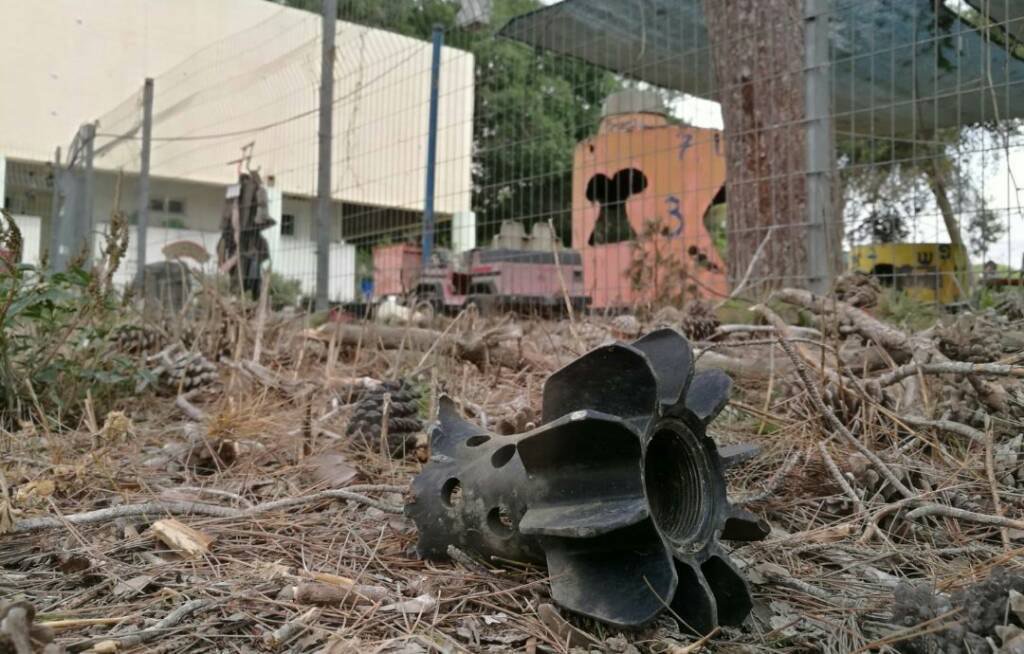
Here is a great example of how anti-Israel academics can get their propaganda spread by pretending to write about something altogether different.
Annabelle Lukin is an Associate Professor in Linguistics at Macquarie University. She has decided to spread her hate under the pretext of critiquing the verb usage on stories from Gaza as not being adequately pro-Israel.
The recent killing of unarmed Palestinians by Israeli forces has sparked not only a reasonable outcry, but commentary on the language journalists use to report these events.
[O]ne of the most important but contested roles of modern journalism [is]the act of putting political violence into words.
The bad news for journalists is there is no neutral mode. If your words sound neutral, it’s likely you’ve simply avoided laying responsibility for the killings, or have imputed responsibility only indirectly.
She illustrates the story this way:
The entire article uses Gaza, and only Gaza, to make her point. Her Twitter account is littered with anti-Israel posts.
But it is ostensibly not an anti-Israel story but a critique of how journalists cover violence.
Maybe I'm just a rube, but while I agree that the wording of stories is important, accuracy should be far more important than "imputing responsibility."
Lukin's desired headline implies that those who were killed were merely protesters, the kind you might see in London or New York.
It is obvious that killing peaceful protesters is abhorrent.
But the Gazans were rioters, not protesters. Throwing firebombs, setting fields on fire with Molotov kites, gunfire and active attempts to invade another country are all military actions, not peaceful protest. Her suggested headline is deceptive, and knowingly deceptive.
Some 85% of those killed were linked to terror groups. That information is now known, and Lukin cannot claim ignorance since she clearly researched all the Gaza stories she could find. To portray them as mere "protesters" - which most media did and continues to do is irresponsible journalism.
The offensive part of the Gaza stories isn't the grammar - it is the lies of omission in not describing the actual context of the riots as being a military operation, planned and executed by a terror group, using civilians as chaff to draw fire while the terrorists attempt to mount an invasion that would include murder and kidnapping. All of this is admitted to by Hamas itself.
To Lukin, the use of passive voice is a bigger problem than the media not doing their actual job of reporting.
Lukin is not concerned with facts - if they go against her hated of Israel.
We have lots of ideas, but we need more resources to be even more effective. Please donate today to help get the message out and to help defend Israel.
Here is a poster going around Palestinian media of students who were mowed down in the prime of their lives by evil Israelis so they couldn't attend final exams.
One Gazan translated this propaganda to English:
Every single one of these students were associated with terror groups.
The student on the left is Bilal Badeir Hussein al-Ashram, who was a Fatah operative according to his Fatah branch in Gaza. Here's their martyr poster for him:
The middle photo is of Ibrahim Ahmad al-Zarqa, 18, who spoke often of his desire to become a martyr and who was active in Hamas' media bureau. Here's another photo of him:
The last student, Muhannad Bakr Abu Tahoun, 21, succumbed to his wounds last Thursday in a Hebron hospital (yes, Israel allowed him to leave Gaza to be treated in Hebron.) He was also linked to Fatah and he was buried in a Fatah flag, as uniformed Fatah militants kissed him:
Three high school seniors killed. Every single one associated with terror groups.
The coincidences keep piling up.
We have lots of ideas, but we need more resources to be even more effective. Please donate today to help get the message out and to help defend Israel.
Tickets for an Israel-Argentina friendly in Jerusalem next month with Barcelona star Lionel Messi expected in the line-up sold out within 20 minutes, the Israeli company handling sales said.
The Le'an agency said on its website that nearly 100,000 fans applied for 20,000 tickets when they went on general sale Sunday evening.
"No sporting event has ever caused such hysteria in Israel," it wrote.
Prices ranged from 44 shekels (about $12, 10 euros) for children and soldiers to 825 shekels in the VIP area.
Another 5,000 places went to supporters of the Israeli national team in a pre-sale reserved for them and over 4,000 tickets were to be distributed to children from needy families.
The game will take place on June 9 at the Teddy Stadium in Jerusalem which has a capacity of 31,733 seats.
Palestinians, predictably, are freaking out, especially since the game is being played in Jerusalem.
The Fatah movement called on the Argentine government and people to cancel their friendly match with the team of the occupying state in Jerusalem, saying that conducting this match in the occupation state and in Jerusalem specifically is an attack on the rights of the Palestinian people, meant to mislead international public opinion, and exploit the sport and this game in particular in order to break the law and international legitimacy for the oppression and oppression of the Palestinian people.
A member of the Fatah Revolutionary Council and its official spokesman Osama al-Qawasmi said in a press statement that Israel is exploiting a noble sport. One of [football]'s goals is to build bridges of love, peace and communication among the peoples of the earth, but Israel is turning it into racist political goals and to persecute others and create hatred. In Jerusalem, the capital of the Palestinian state, we are recalling that the blood of our children, our young men and women in Gaza whose blood has not yet dried up as a result of Israeli bullets, backed by an unjust American decision to consider Jerusalem as the capital of Israel.
Sure Teddy Stadium is inside the 1949 partition lines, but apparently the Palestinians don't care about that any more. Anything that happens in Jerusalem is illegal unless they approve.
What really upsets them is that the entire idea of going to Israel came from star player Lionel Messi for good luck in the World Cup:
:If Argentina win the World Cup this summer, Israel can take some of the credit.
The Argentinian players — Lionel Messi, Sergio Aguero et al — are due in Jerusalem on June 9 to play a friendly match in the Teddy Stadium, seven days before they kick off in their first match in the World Cup finals against Iceland in Moscow. Many of the players are devout Catholics who believe that the opportunity to pray in Jerusalem will boost their World Cup chances.
Pope Francis, an enthusiastic fan of the Argentinean team, will reportedly send a personal emissary to conduct a special mass for the team in Jerusalem’s Church of the Holy Sepulchre.
Messi, the team captain, is in no doubt about how important the trip could be. He said: “I really want to visit the Holy Land and for Argentina this will be an important professional and spiritual journey and I’m convinced that coming to Israel ahead of the World Cup will do us good.”
We have lots of ideas, but we need more resources to be even more effective. Please donate today to help get the message out and to help defend Israel.
Activists Monday laid out 4,500 pairs of shoes in front of the Council of the European Union in Brussels to represent every person killed in the Israeli–Palestinian conflict over the last decade.
Members of the activist group Avaaz covered Jean Rey Square with shoes, donated by citizens across Europe over the last week.
It was part of what the group said was a "growing call for EU governments to protect Palestinian lives by reining in Israel’s government violence".
"Citizens across Europe have one clear message for our governments: Palestinian lives matter to us and they need to matter to you," said Avaaz Campaign Director Christoph Schott.
We have lots of ideas, but we need more resources to be even more effective. Please donate today to help get the message out and to help defend Israel.
After preparations which lasted for about two months, mass riots began to take place every Friday near the border between the Gaza Strip and Israel. The declared purpose of these demonstrations and riots, organized and orchestrated by Hamas, was to break through the border fence and have masses of people enter into Israeli territory. According to the Palestinians, this should symbolically realize what the Palestinians refer to as the “right of return” of the Palestinian refugees (i.e., the destruction of the State of Israel). Another objective was to bring the severe economic situation of the Gaza Strip into public awareness and exert pressure to “break the siege.” The demonstrations and riots still haven’t ended. Hamas intends to pursue them also during the forthcoming weeks, even at the cost of more fatalities.
Hamas aspired to mobilize hundreds of thousands of Gaza Strip residents to participate in these events. However, eventually, the number of participants did not exceed several tens of thousands. In the two peak events, on March 30, 2018 (Land Day, the opening events) and on May 14, 2018 (the day on which the US Embassy was relocated to Jerusalem), about 40,000 residents took part in the demonstrations and riots. On other Fridays, Hamas could not mobilize that many residents. During the rest of the week days, several thousands of people took part in the riots and there were also a number of attempts to carry out terrorist attacks.
The riots culminated in the events of May 14, 2018, with attempts, halted by IDF soldiers, to penetrate en masse into Israeli territory. The attempts to break into Israeli territory were accompanied by intentionally increased violence, throwing pipe bombs and Molotov cocktails at IDF soldiers; attempting to cut the fence; and sending Molotov kites, which set fire to fields in Israeli communities adjacent to the Gaza Strip. As a result of the increase in the number of rioters and the extensive violence on their part (which was unusual compared to previous incidents), the number of fatalities reached its height. Those fatalities consist of Palestinians who were in the front line of the rioters, most of them Hamas operatives.
Emphasizing the message to Palestinians that “sacrificing” oneself for “Palestine” and dying as a “Martyr” while carrying out a terror attack against Israelis is an admirable act, the Bethlehem branch of Abbas’ Fatah Movement lauded the female suicide bomber Andalib Takatka, who murdered 6 when she carried out a suicide bombing in 2002.
Fatah stated that the suicide bomber hurried and carried out her attack a few days before her birthday because she “preferred” celebrating in Paradise, and that “her desire to take revenge against the Jews” was stronger than her desire to blow out birthday candles: Posted text: "Sixteen years ago, on April 12, 2002, heroic self-sacrificing fighter Andalib Takatka carried out a self-sacrificing operation in occupied Jerusalem that led to the death of 6 Zionists and the wounding of another 85...
It was a deeply moving sight to see Andalib read her will... while holding Allah's book and saying: 'This life is fleeting, pointless, and worthless, and the best thing man seeks is a dignified life in Paradise.' ... Andalib carried out the April 12, 2002 self-sacrificing operation, and did not wait until Sunday, April 14, in order to celebrate her 20th birthday. This was because she preferred to celebrate it in a different place and a different manner, and she hurried to extinguish the flame of her desire to take revenge against the Jews instead ofextinguishing her 20th candle in her father's house...
We all bow in admiration and appreciation before the soul of heroic Martyrdom (Shahada) seeker Andalib Takatka."
[Facebook page of the Fatah Movement - Bethlehem Branch, April 12, 2018]
On Tuesday, Hamas fired an enormous wave of mortars into Israel, striking an Israeli kindergarten but causing no injuries. Hundreds of thousands of Israelis were forced to bunkers to weather the attack. That wave of mortars followed an attempt over the weekend by Islamic Jihad terrorists to cut through the Gaza border in order to murder Israelis in their beds; during the chase, terrorists fired at Israeli troops. One terrorist was killed, and another injured. The Israeli Defense Forces also announced that several days ago, Hamas attempted to fly a drone loaded with explosives over the border.
Israel has retaliated with targeted strikes against Islamic Jihad positions in the Gaza Strip. Israeli Prime Minister Benjamin Netanyahu tweeted out:
The IDF will respond with great force to these attacks. Israel will exact a heavy price from anyone who tries to attack it, and we view Hamas as responsible for preventing such attacks against us.
The media coverage of Hamas’ and Islamic Jihad’s latest acts of terrorism has been skimpy at best, even though just two weeks ago, the media went full-coverage over terrorist-organized riots on the Gaza border during the US’ Jerusalem embassy move. During those riots, Hamas announced that the vast majority of Palestinians killed had been Hamas and Islamic Jihad terrorists, and stated openly that they were attempting to use protests at the border as a cover for paramilitary action. Nonetheless, the American and European media insisted that Israel was firing indiscriminately at peaceful protesters, and that the Jerusalem embassy move had been the cause of the violence.
At least 28 mortar shells were fired at southern Israel in at least three separate barrages Tuesday morning as sirens blared throughout the area, the army said, amid heightened tensions along the Gaza border.
One person was lightly injured by shrapnel in his shoulder and was being treated at the Soroka medical center in Beersheba. There were no reports of significant material damage. One shell hit a tree in the yard of a kindergarten shortly before children were due to arrive.
The shellings appeared to be the largest attack from the Gaza Strip since the 2014 war, known in Israel as Operation Protective Edge.
The head of the Eshkol region told Channel 10 news that the army told him the attack was carried out by the Palestinian Islamic Jihad terror group, as revenge for the Israel Defense Forces killing three of its members in a cross-border exchange earlier in the week.
The Iran-backed Islamic Jihad did not immediately take responsibility for the mortar attacks, but its spokesperson praised them, saying “the blood of our people is not so cheap that the terrorists (Israel) can do what they want without deterrence.”
There were no immediate reports of a significant Israeli military retaliation to the attacks. Massive reprisal raids were expected, following the repeated, highly irregular mortar shellings on Tuesday morning.
Following the Gaza mortar attacks, Defense Minister Avigdor Liberman called for a “special situational assessment” from IDF Chief of Staff Gadi Eisenkot and other senior figures from Israel’s security services. They were due to meet in the army’s Tel Aviv headquarters, known as the Kirya, Liberman’s office said.
Palestinian media reported that Hamas and other terrorist groups were abandoning their positions in the Gaza Strip ahead of an expected forceful response by the IDF.
The initial, primary bombardment came at 7 a.m., when approximately 25 mortar shells were toward the Sha’ar Hanegev and Eshkol regions, as parents were beginning to send their children to school, the IDF said.
The army said its Iron Dome missile defense system intercepted the majority of the incoming shells from the first barrage.
Lt. Col. Jonathan Conricus is reporting from the Israeli kindergarten that was hit by several mortars earlier this morning. The kindergarten is located in a kibbutz near the Gaza Strip pic.twitter.com/vZBa0y0UJm
Projectiles were fired from Gaza into southern Israel Tuesday afternoon in a fresh salvo of cross-border fire amid the most intense fighting seen in the region in years.
There were no immediate reports of injuries from the afternoon barrage.
Sirens blared in Israeli communities in the border region at least six times starting around 3 p.m., sending residents fleeing for shelter hours after having been given the all-clear following a morning volley.
Sirens were reported as far away as the Ashkelon industrial zone and Ofakim, dozens of kilometers from the Strip, indicating the projectiles being fired were longer range than the mortar rounds shot earlier in the day.
There was no immediate word on how many rockets or mortar rounds were fired.
The military said a total of 25 rockets had been knocked down by Iron Dome missile defense batteries as of 4 p.m., though the tally was not official.
At least two projectiles in the afternoon barrage landed near Kibbutz Re’im, according to emergency response officials.
There were no reports of injuries. One man was lightly injured by shrapnel in the morning.
Palestinians in the Gaza Strip opened fire with a machine gun at the southern Israeli town of Sderot on Monday night, causing damage but no injuries, in the second such attack in as many weeks, the army said.
The heavy gunfire triggered incoming rocket sirens in Sderot and the surrounding Sha’ar Hanegev region, which sent thousands of Israelis rushing to bomb shelters, the army said.
The shooting attack came hours after a clash between Israeli soldiers and Palestinian gunmen on the Gaza border earlier in the day.
The gunfire damaged a number of buildings in Sderot, the city said, as well as at least one car, according to Israel’s Hadashot news.
This was the second machine gun attack on Sderot in under two weeks. On May 16, bullets also struck a number of homes in the town, though in that case no rocket siren was triggered.
Israel struck tens of targets belonging to Islamic Jihad and Hamas across the entire Gaza Strip after several mortar and rocket barrages were fired towards Israeli communities on Tuesday major escalation in the southern part of the country.
“The situation in which a terror organization fires into Israeli communities is unacceptable. Since noon we have been operating throughout the Gaza Strip in a series of attacks which has not been done since Operation Protective Edge" in 2014, said IDF Spokesman Brig-Gen. Ronen Manelis in a phone call with reporters, explaining that over 35 targets were struck including seven military compounds, weapons storage sites, naval targets and terror headquarters.
Among the targets was a Hamas tunnel which stretched from Rafiah one kilometer into Egypt’s Sinai Peninsula and then 900 meters into Israel near the Kerem Shalom crossing.
According to Manelis the tunnel, which was the 10th tunnel destroyed by Israel since October, was not yet ready for use but was meant to act as both as an offensive attack tunnel as well as a weapons smuggling tunnel.
The Some 30 mortars and some Iranian rockets were launched by Islamic Jihad towards Israeli communities with at least 25 intercepted by the Iron Dome missile defense system, the IDF Spokesman said.
A White House official has weighed in on a series of rocket volleys from Gaza onto Israel that continued throughout the day on Monday.
"Reprehensible," tweeted Jason Greenblatt, a senior adviser to President Donald Trump and his special envoy to the Middle East peace effort. "Mortars fired from Gaza at a kindergarten and community in Israel!"
Reprehensible – mortars fired from Gaza at a kindergarten and community in Israel! Hamas has failed – all it can offer is terror. Palestinians in Gaza need real leaders to work on Gaza’s real problems with its water, its economy and so much more.
— Jason D. Greenblatt (@jdgreenblatt45) May 29, 2018
"Hamas has failed– all it can offer is terror," he continued. "Palestinians in Gaza need real leaders to work on Gaza's real problems with its water, its economy and so much more."
Greenblatt hosted a rare conference on the humanitarian crisis facing Gaza earlier this spring that brought together diplomats from Israel, Saudi Arabia, Qatar, and the wider Arab world, as well as other global players. He and Jared Kushner, the president's son-in-law and senior adviser, plan on releasing their plan for Middle East peace over the coming weeks and months.
Politicians on the right and left talked tough after the attack from Gaza on nearby Israeli towns Tuesday.
“Shooting mortars at a preschool crosses a serious red line,” Knesset Speaker Yuli Edelstein said. “We cannot allow terrorist organizations to hurt and undermine the security of the children and other residents of the Gaza envelope towns.”
Former defense minister MK Amir Peretz (Zionist Union), a resident of Sderot, said that the salvo from Gaza was unlike anything seen since 2014’s Operation Protective Edge and called on the IDF to respond.
“It doesn’t matter if it’s Hamas or Islamic Jihad. Hamas is in charge in the Gaza Strip and it must pay the price,” Peretz added.
Yesh Atid MK Haim Jelin, the former head of the Eshkol Local Council, which was struck by mortars, called on residents to continue their daily routine, and for the government to make sure there’s an appropriate response that leads to an end to the shootings.
“Protective Edge ended with the heads of Hamas knowing that we bombed their families’ homes. They also have vulnerabilities. They cannot disrupt our daily lives and civilian resilience,” Jelin stated.
Representatives from the European Union and United Nations on Tuesday condemned the firing of more than two dozen mortar shells from the Gaza Strip at southern Israel, both calling it “unacceptable.”
The EU’s ambassador to Israel, Emanuele Giaufret, as well as the UN Special Coordinator for the Middle East Peace Process, Nickolay Mladenov, both focused on one of the shells striking a tree in the yard of a kindergarten in the Eshkol region, less than an hour before students were due to arrive.
“As kids were preparing for school this morning a barrage of rockets from Gaza fell on southern Israel,” the EU envoy tweeted. “One landed outside a kindergarten. I know the resilience of communities in southern Israel but indiscriminate attacks are totally unacceptable and to be condemned unreservedly.”
Mladenov said in a statement that he was “deeply concerned by the indiscriminate firing of rockets by Palestinian militants from Gaza towards communities in Southern Israel, at least one of which hit in the immediate vicinity of a kindergarten and could have killed or injured children.”
Tuesday morning’s barrages of mortar shells and rockets into southern Israel were quickly rumored in Gaza to be the work of the Islamic Jihad terror group. And hours after more than two dozen mortar shells hit Israel, the IDF carried out retaliatory strikes that were mainly directed at Islamic Jihad’s military wing.
Islamic Jihad’s role indicates we are witnessing an attempt by Iran to spark a war on the southern border. And if the deterioration of the situation is not halted in the very near future, the attempt may prove successful. Already we have seen an attack on Israeli targets unprecedented since 2014’s Protective Edge conflict, with a consequent Israeli response against targets in Gaza.
The Islamic Jihad barrages were ostensibly aimed at avenging Israel’s reported killing of three of its operatives, who were attempting an attack, earlier this week in the Rafah area. That was the immediate pretext. But the nature and scale of the Islamic Jihad response — heavy fire at civilian targets in Israel — indicates that revenge was not the only motivation. It is possible that this is at root an Iranian move, seeking to have Israel pay a price in the south for targeting Iran in the north — across the border in Syria.
After all, it is hard to believe that Islamic Jihad, a smaller ally-rival of Hamas which is financed and trained primarily by the Iranians, would have initiated this kind of action, with its dramatic consequences for Gaza, without Tehran’s approval.
The Be'eri Crater Reserve adjacent to the Gaza border is considered to be among the most picturesque tourist sites in the region, with its green landscape serving as a natural habitat for a variety of species of animals.
During the winter, the nature reserve was covered by a blanket of multiple shades of green, interspersed with red roses in what was a symbolic testament to the success of making a desert bloom.
In recent weeks, however, the greenery has been replaced by a blackened and charred landmass caused by incendiary kites flown over by Palestinian rioters from the Gaza Strip, whose latest weapon in their arsenal is wreaking havoc on southern residents and farmers.
On Sunday alone, 200 more dunams were incinerated by the kites which are affixed with Molotov Cocktails.
Since the kites were first used in April as part of what Gazans describe as the “March of Return” protests, the "aerial terror offensive" against the Israeli border communities has continued with greater vigor, including some 300 incendiary kites flown into Israel's territory, causing 100 fires and decimating more than 3,000 acres of wheatfields.
In addition, millions of shekels worth of damage has been caused to the farmers of the area.
The Israeli army on Tuesday afternoon struck what it said was a Hamas tunnel in the Gaza Strip that extended hundreds of meters into Egyptian and Israeli territory.
The IDF said the U-shaped attack tunnel destroyed near Rafah and the Kerem Shalom border crossing was still under construction and not yet usable.
The military said the tunnel crossed from Gaza into Egypt and from there into southern Israel, and was intended both for smuggling weapons and for attacks against Israel.
Its full length was around 2 kilometers (1.2 miles), the army said, and the segment inside Israeli territory was 900 meters (half a mile) long.
The military discovered the tunnel in the past two weeks, an army spokesperson said.
The army called the tunnel’s design “unique.”
“This is a very long tunnel,” a source told the Ynet news site. “It also had exit shafts on the Egyptian side. The tunnel was dealt with using airstrikes [in Gaza], and in the coming hours will also be taken care of on our side to neutralize it entirely.”
Israeli officials reportedly informed Egyptian counterparts of the planned strike on the tunnel, according to Hebrew-language media. It was not clear if Israeli strikes on the tunnel included action over the border in Egypt.
Video footage of the strike on a Hamas terror tunnel near the Kerem Shalom Crossing and terror sites in the Gaza Strip: pic.twitter.com/XLyOveHXNA
This tunnel was designated for terror purposes and smuggling. The tunnel was detected in its construction phases near the Kerem Shalom Crossing, through which many goods are transferred to Gaza residents pic.twitter.com/Jxkni9ARqP
Likud MK Anat Berko on Monday called on the military to stop purchasing produce from the Gaza Strip.
She further urged Defense Minister Avigdor Lieberman to review the practice and put a stop to it.
Berko, a member of the Knesset's Foreign Affairs and Defense Committee sent a letter to Lieberman on the matter after seeing a photo of produce crates from Gaza in a military base's kitchen.
"Of all the places where produce from Gaza can end up – does it have to end up in the military? Is this what we want to give the soldiers who keep us safe?" she wrote.
Berko noted that she does not dispute Gaza farmers' right to earn a living and sell their produce in Israel, saying her issue was that it ended up on military bases.
Hamas' Al Qassam Brigades’ Spokesman makes it clear: Iran funds Hamas' terrorism through donations of weapons pic.twitter.com/EkT0Kb8tvP
In response to Israel’s acts of self-defense on the Gaza border to prevent armed Hamas terrorists from storming the fence and heeding the calls of Hamas leaders to massacre Israelis—in their own words, to “tear out their hearts from their bodies,” and “draw the map of return in blood”—UN human rights officials rushed to condemn only Israel for “excessive” and “disproportionate” force against supposedly “unarmed demonstrators,” while completely ignoring Hamas’s role in and responsibility for the violence.
On May 18, 2018, the UN Human Rights Council held a special session on the violence, and adopted a one-sided resolution condemning only Israel, and failing to even mention Hamas.[1] The resolution presumed Israel guilty of violations of international humanitarian law, international human rights law, and war crimes, and created an international Commission of Inquiry into Israel’s actions.
Regrettably, statements by High Commissioner for Human Rights Zeid Hussein and Special Rapporteur on Palestine Michael Lynk were replete with incorrect and misleading accounts of fact and law. Below is a review of the most glaring inaccuracies and misrepresentations in the following statements:
May 18, 2018 statement of High Commissioner for Human Rights Zeid Hussein.[2]
May 18, 2018 statement of Special Rapporteur for Palestine Michael Lynk.[3]
May 15, 2018 statement of Special Rapporteurn for Palestine Michael Lynk.[4]
We found six primary concerns with these statements.
“Fatah will bring back armed struggle” unless international peace conference is held
European Union foreign ministers met on Monday to discuss the conflict between Israelis and Palestinians and in particular the latest violence in the Gaza Strip.
Hostilities have soared since Hamas, the terrorist group that controls Gaza, launched a border riot campaign on March 30. Israel has repeatedly presented evidence that terrorists have been using the mass demonstrations as cover to try to breach the border and carry out attacks.
As they were arriving for a meeting of European Union foreign ministers in Brussels, the EU's top diplomat, Federica Mogherini and the Dutch and Belgian foreign ministers said they would continue to push for a two-state solution with Jerusalem the capital of both states.
"We will have a discussion with the ministers on the situation in Gaza," Mogherini said.
"As you know, the commitment from the European Union and member states to continue to work for a two-state solution with Jerusalem as the future capital of both states is solid, and we will brainstorm a bit with the ministers on how we can try to move this agenda forward."
Responding to the protest campaign and appeal of UN Watch, democracies have strongly protested Syria’s take-over of the presidency of the UN-backed Conference on Disarmament.
United States: “Monday, May 28, will be one of the darkest days in the history of the Conference on Disarmament with Syria beginning its four-week presidency. The Damascus regime has neither the credibility nor moral authority to preside over the CD. The international community must not be silent.”
Britain: “The UK deplores the fact that Syria will assume the presidency of the Conference on Disarmament, given the regime’s consistent and flagrant disregard of international non-proliferation and disarmament norms and agreements,” British ambassador Matthew Rowland said in a statement. (Source: AFP)
Germany: “The Syrian regime has caused immeasurable suffering — through massive bombardment, oppression, starvation and repeated use of chemical weapons,” a German Foreign Ministry spokesman said in Berlin. “Therefore, the regime has no credibility whatsoever to carry out the presidency in a substantive and adequate manner.” (Source: DPA)
The United States will stage a walkout in protest at Syria’s presidency of the Conference on Disarmament at the United Nations in Geneva, US Ambassador Robert Wood told reporters on Tuesday.
“We are going to walk out at some point this morning and we will be taking other actions that you will see over the course of Syria’s presidency, so please stay tuned,” Wood said.
Washington did not plan a boycott of the four-week presidency but wanted to hold Syria to account for its use of chemical weapons, he said.
Ronen Lubarsky, an Israel Defense Forces’ soldier from the elite Duvdevan army unit, was laid to rest on Sunday morning at Jerusalem’s Mount Herzl military cemetery. The 20-year-old from Rehovot passed away two days after a large slab of marble was dropped on him during a mission to arrest terrorists.
Lubarsky was brought to Jerusalem’s Hadassah Ein Kerem Medical Center in critical condition on Thursday, when supporters of terror suspects in al-Am’ari refugee camp near Ramallah dropped a marble slab on his head from the third story of a building on Thursday morning. The IDF reported that he had been wearing a helmet.
The army posthumously promoted him to the rank of staff sergeant.
His commander, Lt. Col. A., called him “the son of a family of warriors, the salt of the earth.”
“While we prayed by your bedside at the hospital, your mother pointed at family members and said, ‘they’re all warriors, but Ronen is the best,’ ” he said. “Your mother was right. You were among the finest fighters in the unit.”
A large IDF force entered the al-Am’ari refugee camp in Samaria on Monday and began carrying out house-to-house searches to find the attacker who on Thursday fatally wounded Ronen Lubarsky, a 20-year-old Israeli soldier from the elite Duvdevan unit.
Riots broke out in the camp as the soldiers entered, with residents throwing homemade bombs and rocks. Soldiers were forced to respond with riot-control measures. At least 13 Arabs were lightly to moderately injured.
Lubarsky, of Rechovot, was critically injured in an operation to apprehend terror suspects in al-Ama’ri when a marble slab was dropped on his head from a building three stories above him.
He was transferred to Hadassah Ein Kerem Medical Center, but died of his wounds and was buried in the early-morning hours on Sunday at Jerusalem’s Mount Herzl military cemetery.
Despite an official boycott by the Palestinian Authority of Washington following US President Donald Trump’s recognition of Jerusalem as the capital of Israel, a senior PA official reportedly met with Mike Pompeo last month, days before he was sworn in as US secretary of state.
The meeting in Washington between then-CIA director Pompeo and Majed Faraj, head of the PA’s General Intelligence Service, was known to PA President Mahmoud Abbas and to a small number of high ranking officials, Haaretz on Monday quoted senior Palestinian officials as saying.
It would be the highest-level contact between the PA and the US in over six months.
The Palestinians strongly objected to the US decision on Jerusalem and the subsequent relocation of the US embassy from Tel Aviv to the capital earlier this month. The Palestinians believe the US move undercuts their claim to parts of Jerusalem as the capital of a future state.
Abbas froze ties with the Americans after Trump announced the move in December.
The Israeli navy stopped and seized control of a boat carrying demonstrators as it tried to leave the Gaza fishing zone on Tuesday in defiance of Israel’s blockade of the coastal enclave.
“The IDF seized a Palestinian boat carrying some 17 sailors who broke the sea blockade,” the navy said. “The seizure was carried out without incident.”
The navy said after it had been searched, the boat would be towed to port in the Israeli city of Ashdod.
Organizers had said the vessel was carrying wounded Gazans seeking treatment, and the IDF said medics were waiting to treat the sick or injured on board if necessary.
“Afterwards the Palestinians will be returned to Gaza,” the army said.
US President Donald Trump’s special envoy to the Israeli-Palestinian peace process, Jason Greenblatt, on Tuesday slammed the “reverse flotilla,” an effort by Palestinian activists to break Israel’s naval blockade of the coastal enclave, set to get underway later in the day.
In a series of early morning tweets, Greenblatt condemned Hamas, which has ruled the Strip since 2007, for what he termed “deadly theatrics” that needlessly imperil the lives of innocent civilians.
“Shame on all involved in inciting the so called ‘reverse flotilla’ today. Hamas treats this like a play being acted out for a live media audience. But these are real lives Hamas is cynically risking in a grim bid to hold on to power,” Greenblatt wrote.
“There is no shortcut for a better future for all people in the region. Hamas must stop with deadly theatrics needlessly putting lives at risk and begin the process of building better lives for the Palestinians of Gaza and their neighbors,” he went on.
ProvocationAlert!
Calling all journalists reporting about the boat that's going to "break the blockade" please ask the organizers why they didn't leave #Gaza via Rafah crossing that is open during #Ramadan? Also, why risk lives of sick and injured? https://t.co/ePEzemNLZG
— LTC (R) Peter Lerner (@LTCPeterLerner) May 29, 2018
Egyptian Cleric Muhammad Al-Zoghbi: The Jews Assassinate Scientists and Activists So That There Will Be No Brilliant Minds in the Arab and Islamic World pic.twitter.com/EeSEgJKBV6
We have lots of ideas, but we need more resources to be even more effective. Please donate today to help get the message out and to help defend Israel.
On January 31, 1961, Yaacov Herzog - the Israeli ambassador to Canada at the time - debated the historian Arnold Toynbee at the B’nai B’rith Hillel House in Montreal. He was responding to a lecture Toynbee gave just a few days earlier at McGill University, where Toynbee questioned the right of the Jewish People to even have a state. In his writings, Toynbee characterized the Jews as a “fossil” civilization.
An Olympic aircraft lands at Athens airport - and one of the passengers is Socrates.
Since ancient Greek is not the same as modern Greek, a translator is needed.
Socrates wants to see the Acropolis - but it is in ruins.
So is the Temple of Zeus.
No Neptune, Mars, Aphrodite, or Helen. Only Christianity.
There are no longer countries under Greek rule.
The only thing modern Greece has in common with the Greece of Aristotle or Plato is geography.
Meanwhile, an Alitalia flight stops at an airport near Rome - and Julius Caesar gets off the plane.
Latin and Italian are different, so a translator is needed.
Caesar wants to go to the Temple of Jupiter.
They offer instead to take him to the Vatican.
The current Pope is from Argentina, before that from Germany and before that from Poland. Not Italian
No Jupiter. No Colosseum either.
And no Roman Empire.
Here is the rest of the story in full:
At Ben Gurion airport, a customs officer welcomes an elderly man with a white beard: “Shalom Aleichem!”
The man answers, “Aleichem Shalom. My name is Moshe.”
“Really? I’m also Moshe! I was born in Tbilisi, Georgia.”
“And I was born in Egypt.”
“Did you visit Israel before?”
“Unfortunately never.”
“So it’s not your homeland.”
“This is my homeland. I personally know of the Divine promise. Are you Jewish?”
“Of course I’m Jewish. Ani Mosheke m’Gruzia.”
“I’d like to sightsee, but I didn’t take along Tefillin. Do you perhaps know where I can get tefillin?”
“Tefillin? I’ll give you mine.”
“You have tefillin?”
“Of course I have tefillin. I davened Shacharis an hour ago.”
“You also have a tallis with tzitzis?”
“Of course!”
“Do you have a quiet place for me to pray?”
“Sure! We have shuls here in the terminal. Sefard and Ashkenaz.”
“And what Nusach is your Torah scroll?”
“Nusach???!!! We all have the same Torah, each word carefully transcribed back to Moshe Rabenu!”
Same religion. Same language. Same homeland. Same commandments. Same faith. If this is not a nation, what is? [emphasis added]
About that language, Hebrew.
Hebrew has been reestablished as our language, just as Israel itself has been reestablished as our land.
And like the land and the people, Hebrew is also special.
In 2007 on the 150th birthday of Eliezer Ben-Yehudah, David Hazony wrote about one aspect of the uniqueness of Hebrew, about how compact it is (the word "is" does not even exist in Hebrew). Hebrew also you to say in just a few words what can require sentences to say in English. The long history of Hebrew as the language of the Prophets is an unending source of idioms and ideas.
Eliezer Ben-Yehuda working on his dictionary. Public domain
Hazony describes how Hebrew has grown from a restricted language, comparable to Latin. It was used in the synagogue, to understand texts and in conversation only when Jews from different countries needed to bridge the language gap.
Yet today the State of Israel thrives on that same ancient -- and not so ancient -- tongue.
The density of meaning in Hebrew is a writer’s dream. Nearly anyone can imbue a seemingly simple sentence with multiple, generally complementary meanings simply by choosing a specific verb, verb form, noun or adjective. These double, triple and even quadruple meanings of one word are a source of unbounded joy for a writer. To take just one example, the Hebrew word “shevet” means returning and it also means sitting. And it is also a homonym for club – as in billy club – and for tribe.
In 2005, the IDF named the operation expelling the Israeli residents of Gaza and Northern Samaria “Shevet Achim,” or returning or sitting with brothers. But it also sounded like it was making a distinction between tribesmen and brothers. And it also sounded like “clubbing brothers.”
As this one example demonstrates, one joyful consequence of the unique density of the Hebrew language is that satirical irony comes easily to even the most dour and unpoetic writers.
And discussing Hebrew, of course, brings Glick back too to talking about Israel:
But the experience of speaking in Hebrew and of living in Hebrew is incomplete when it is not experienced in Israel. It is one thing to pray in a synagogue in Hebrew or even to speak regular Hebrew outside of Israel. The former is a spiritual duty and a communal experience. The latter is a social or educational experience. But speaking Hebrew in Israel is a complete experience. Hebrew localizes Jewishness, Judaism and Jews. It anchors us to the Land of Israel. Taken together, the Hebrew language and the Land of Israel stabilize a tradition and make the Jewish people whole.
Hebrew is alive and well. At least in the Arab and Druze communities. For students from those sectors, the Hebrew language has become the new business administration - a social and professional catapult to get ahead and succeed in life. The sticklers add Hebrew literature, too. It's a triumph of practicality over ideology. The traditional attitude that language is part of national identity and that to study Hebrew is to cross the line, has given way to the quiet conquest of the Hebrew Language Department - at the University of Haifa by Arabs from the north and at Ben-Gurion University by Bedouin from the south. The graduates are almost always assured of a teaching job, which brings with it a livelihood, honor and prestige, relatively speaking. Hebrew is obligatory in every Arab and Bedouin elementary and high school, and good teachers are in high demand.
But ironically, if Hebrew can be a tool for the unity of Jews and Arabs in Israel, it may also illustrate the disunity among Jews in Israel and those in the Diaspora.
The change came towards the end of the 19th century. In 1896, Ahad Ha'am started publishing his review Hashiloah, he did it in Hebrew.
Ahad Ha'am (Asher Ginsberg). Public domain
He considered it the natural language of the Jews - in any other language, the periodical would be understood by Jews in some countries, but not in others.
Ahad Ha’am’s confidence, however, was misplaced. By the time Hashiloah was founded, Hebrew as an international language was steeply on the decline, and the journal folded after several years—the very years, it so happened, in which the spoken Hebrew revival was taking root in Palestine. As for American Jewry, by the time Ahad Ha’am died in 1927 it had its own literary review, the Menorah Journal, which would have embodied Ahad Ha’am’s editorial vision almost entirely were it not for the fact that it was in English. Most of its readers could not read Hebrew at all. They were the first of the new audience of American Jews for whose benefit the great Hebrew-English translation enterprise of the last 50 years has taken place.
Here, then, is a great historical irony. As long as Hebrew was the first language of no educated Jew in the world, it was the second language of every educated Jew; now that it has become the mother tongue of millions of Jews in the state of Israel, it has largely ceased to be studied by Jews elsewhere. It has in effect been demoted to a Judeo-Israeli, a new Jewish regional speech. In both relative and absolute numbers, far more Israeli and Palestinian Arabs now have a working command of it than do American Jews. [emphasis added]
If an Eldad the Danite were to turn up today, Hebrew would not get him very far. It is in English that Jewish travelers speak to Jews in foreign countries; in English that Jewish scientists in Russia e-mail to their Jewish colleagues in France and Jewish professionals in Argentina write to Jewish counterparts in Great Britain; and in English that our contemporary Eldads—peoples in remote regions making claims to ancient Israelite roots—enter into contact with the world’s Jews.
Rabbi Lau's story would have gone differently if Moshe had gotten off the plane in the US instead of in Israel.
At the same time that Hebrew has become the spoken language of Jews (and Arabs) in Israel, it has become a foreign language among Jews outside of Israel, in a way that it was not before.
Many do not speak it.
Do not understand it.
And some may not even recognize it.
Also writing 10 years ago in The Forward, Philologos writes about the possibility that the slow adoption of Hebrew by the Arabs could lead, in a generation or two, to the integration of Arabs within Israel.
But the bigger question remains.
What will the Jewish community outside of Israel, in the US and elsewhere, look like in 2 generations?
We have lots of ideas, but we need more resources to be even more effective. Please donate today to help get the message out and to help defend Israel.
BDS is taking credit for what they claim is Shakira's decision not to play in Israel.
Israeli media had reported earlier this month that Shakira would play in Tel Aviv's Yarkon Park on July 9. But I cannot find any mention of this on any ticket or concert sites.
LiveNation tweeted this yesterday:
The media has incorrectly reported that Shakira will be performing in Tel Aviv this summer. While no dates this summer will work, Shakira and Live Nation hope to bring a show to her fans in Israel in the future.
Looking at Shakira's tour schedule, she usually plays every other day during her European tour. There is nothing scheduled for July 9, but there is for July 7 (Barcelona) and July 11 (Istanbul) and July 13 (Beirut.)
It seems likely that her people had put in a placeholder for a possible Israel show and that there were negotiations She wouldn't have traveled from Israel to Lebanon directly, so Istanbul would be the logical place for her to perform in between. But while tickets are available for every other stop on her tour through the summer in Europe and the US, at no point were any tickets put on sale in for a show in Israel. Certainly nothing was officially scheduled.
So what happened? Did Live Nation leak the story to gauge BDS opposition? That seems unlikely. Probably the deal fell through for other reasons and the show was leaked too early.
At any rate, the tweet does not say a word about any political motive, and saying that she wants to play in Israel is hardly an endorsement for BDS.
It is worth noting that no one seems to be concerned that Shakira is playing in Lebanon on July 13, when Lebanon has treated Palestinians worse than dirt for decades.
We have lots of ideas, but we need more resources to be even more effective. Please donate today to help get the message out and to help defend Israel.
More than two dozen mortar shells were fired at southern Israel in at least three separate barrages Tuesday morning as sirens blared throughout the area, the army said, amid heightened tensions along the Gaza border.
One person was lightly injured by shrapnel in his shoulder and was being treated at the Soroka medical center in Beersheba. There were no reports of significant material damage. One shell hit a tree in the yard of a kindergarten shortly before children were due to arrive.
The shellings appeared to be the largest attack from the Gaza Strip since the 2014 war, known in Israel as Operation Protective Edge.
The head of the Eshkol region told Channel 10 news that the army told him the attack was carried out by the Palestinian Islamic Jihad terror group, as revenge for the Israel Defense Forces killing three of its members in a cross-border exchange earlier in the week.
The Iran-backed Islamic Jihad did not immediately take responsibility for the mortar attacks, but its spokesperson praised them, saying “the blood of our people is not so cheap that the terrorists (Israel) can do what they want without deterrence.”
Islamic Jihad and Hamas media are reporting on the mortar attacks and praising them, but for the past few years terror groups have not been as interested in taking responsibility for them.
The reason is that they don't want Israel to target them.
But Hamas is responsible in the end, and Hamas has stopped many rocket and mortar attacks in the past because it cannot afford a war.
This seems to be a tactical blunder on Hamas' part, as it has been successful in convincing the world that the Gaza riots were "peaceful protests" and it is hard to portray mortars as peaceful. Indeed, the EU and UN condemned this attack, but only condemned Israel for its response to the Gaza riot.
Terror media are showing photos of missiles fired from Gaza but they do not appear to be from this morning's attack, rather old file photos.
We have lots of ideas, but we need more resources to be even more effective. Please donate today to help get the message out and to help defend Israel.
An op-ed in Arab News by Dr. Majid Rafizadeh describes why Iranian antisemitism and anti-Israel positions are strategic.
To begin with, the clerics did not view their power and revolution as limited to Iran’s borders. One of the vital parts of the regime’s pursuit of regional domination is expanding its influence in the Levant, which has considerable strategic importance in the region. Having a presence in the Levant ensures Iran’s access to the Mediterranean Sea and grants the mullahs a significant edge over the Arab world. Competing with, outdoing, outperforming, and dominating powerful Arab states is one of Iran’s regional aims.
To achieve such an objective, the most effective way was to create an enemy. Which enemy is better than a powerful state such as Israel? From the mullahs’ perspective, having such a strong enemy would justify Tehran’s intensive military adventurism and expansionist policies in Lebanon, Syria, and Palestine.
It would also justify Iran’s efforts to advance its nuclear and ballistic missile programs and allocate a significant part of its budget to the Islamic Revolutionary Guard Corps (IRGC) and its elite branch, the Quds Force, which is in charge of clandestine and extraterritorial military operations.
Secondly, projecting an obsessive hostility toward Israel paves the way for the Iranian leaders to defend establishing “resistance” groups, such as Hezbollah. In truth, these so-called resistance groups act on behalf of the Iranian regime, advancing its interest in the region, and assist Tehran in interfering in the domestic affairs of Arab nations.
Third, having Israel as an enemy helps the mullahs to repress domestic opposition. One of the charges commonly used to silence dissidents and opponents is being a “Zionist spy.” The penalty can range from long imprisonment to death.
Finally, the Islamic Republic is a revolutionary regime that sits on the bedrock of its extremist founders’ ideology. One of the core revolutionary principals of Khomeini and his gilded circle was anchored in anti-Semitism. The execution in May 1979 of Habib Elghanian, the head of the Jewish community, a businessman, and a philanthropist — after a 20-minute trial on trumped-up charges — was the regime’s first robust anti-Semitic message to Jewish communities and the rest of the world.
Threats to annihilate Israel, Holocaust denial by senior officials such as former president Mahmoud Ahmadinejad, and hosting anti-Semitic events such the annual Holocaust Cartoon Competition are common practices within the clerical establishment, and are further examples of the regime’s anti-Semitic stance.
The mullahs’ obsession with Israel has nothing to do with defending and advancing the cause of the oppressed Palestinian people. It is for strategic and ideological reasons; to export the ruling clerics’ extremist ideology, to dominate and expand its influence in the Levant, to justify its military adventurism, and to more easily suppress domestic opposition and dissent.
The analysis seems pretty solid, and the fact that Arab News published it is significant - it means that traditionally antisemitic Arabs are starting to viewing hating Jews as a bad thing, under some circumstances.
We have lots of ideas, but we need more resources to be even more effective. Please donate today to help get the message out and to help defend Israel.
A little behind on my magazine reading, I read Karl Vick's description of the "Great Return March" riots in Time. He had adequate time to correct his mistakes before the issue was published, but there is no correction, in the magazine or even online.
Let's do a little fisking:
In Jerusalem, the ceremonial opening of the new U.S. Embassy proceeded at a stately pace, President Trump’s daughter Ivanka unveiling a plaque that announced not only the new address for U.S. representation in Israel but also a new, snugger alignment with the host nation. A few miles away, cameras captured the chaos as Israeli soldiers methodically cut down some 2,700 Palestinians, 60 fatally, as they marched toward the fence that separates Israel from the Gaza Strip.
Even Gaza's Health Ministry never claimed that Israel shot 2700 people. It said that some 3000 were injured - half of them from tear gas. Vick made an assumption and he was wrong.
The people who were killed were not shot while "marching" - they were either trying to cut the fence or directing people to set fires, hurl firebombs and cut the barbed wire and fence.
At press time, it was known that most of the dead were Hamas militants dressed like civilians. Time didn't update the article between online and print publication with this critical information, nor is it there now.
That patch of land, which hugs the Mediterranean Sea between Israel and Egypt, is home to some 2 million Palestinians, most of whose families once lived on land that is today Israel. They are stubborn refugees with no prospect of return, physically confined in an area only twice the size of the District of Columbia and with no prospect of improvement. Last year a Gaza home had four to six hours of electricity a day and water for six to eight hours every fourth day. Youth unemployment is 60%.
They are not refugees. There is only one definition of refugee under the Refugee Convention. Just because UNRWA calls them refugees does not make them refugees.
Beyond the absurdity of calling great-grandchildren of those who mostly voluntarily left their homes to be "refugees" we can add that from their own perspective, their families were from Palestine and they now live in Palestine. So how can they be considered refugees?
Vick cleverly doesn't directly blame Israel for Gaza's power issues but the implication is clear. Yet the Gaza power plant can run at full capacity if the Arabs would give Gazans the fuel. They aren't.
No corrections in the two weeks since this was written.
We have lots of ideas, but we need more resources to be even more effective. Please donate today to help get the message out and to help defend Israel.
The Gaza border clash was not a situation of armed conflict, nor had it anything to do with the laws of armed conflict and occupation of territory. It was routine border protection by a sovereign state, from within its sovereign territory, facing a blatant threat of border violation by violent elements on the other side of the line.
Accusing Israel of committing war crimes, massacres, and violations of international humanitarian law, as well as invoking criteria and norms – including the customary international law rule of proportionality – characteristic of situations of armed conflict, has no relevance vis-Ã -vis the situation along the delimiting fence between Israel and the Gaza Strip.
The highly publicized visit by the Palestinian Foreign Minister to the prosecutor of the International Criminal Court (ICC), armed with a new set of complaints of war crimes and violations of the Geneva Conventions along the fence, cannot be considered to be anything other than a flawed and cynical manipulation of the Court.
Israel will not collaborate with the United Nations Human Rights Council on an investigation into the recent riots on the Gaza border. Instead, it will issue its own report on the events, Hebrew media outlets reported on Sunday.
Around a hundred Palestinians were killed in the riots, most of them terrorists. The events were marked by attempts to breach the border fence, the planting of explosives, and the use of kites equipped with incendiary devices.
The UNHRC recently voted to establish a committee to investigate the riots, with only the US and Australia opposing the idea.
Israel views the UNHRC as wholly biased and therefore unable to conduct a fair investigation. The overwhelming majority of the council’s resolutions are anti-Israel, and the Jewish state is the only country that is the object of a permanent agenda item.
The Israeli Foreign Ministry said of the council, “The results of the investigatory committee are known in advance and are written into the language of the resolution itself. It is clear to everyone that the council’s goal is not a real investigation, but to harm Israel’s right to self-defense and the specific demonization of the Jewish state.”
In response, Israel will issue its own report. According to the Hebrew news site Walla, a top legal official stated, “Previous experience teaches that the best response to the false narrative put forward by the Human Rights Council is to present a direct and professional presentation of the facts for their approval.”
So that brings us to the Hamas protest against the US Embassy on the Israeli/Gaza border. Hamas' strategy is to build international opposition to a Jewish state. Since they don't care about human life, any tactics will do.
They sent their fighters – as well as women and even some children – to try to breach the Israeli border and attack Israelis within Israel. The Israelis tried to stop them breaching the border with tear gas and even leaflets. But they kept coming trying to breach the border. The Israeli army fired at the invaders feet but even that didn't work. In the end they did shoot dead some of the attackers.
That may have been tragic. But 80 per cent of the victims were Hamas fighters, not Sunday afternoon protesters. For Hamas it was a triumph. They got what they wanted. Martyrs, as they like to call the victims, helped them win a media propaganda war worldwide. They saw it as a price worth paying. Even thrusting children and babies into a conflict zone is okay by them.
How feckless are so many governments to be taken in by these cruel tactics. And where, ultimately, will this lead? Will the Jewish people, mercilessly persecuted for centuries, give up their own state? Will those great people who have given so much to science and scholarship give in and let cruel extremists like Hamas define their future? I think not.
A drone armed with explosives was launched from the Hamas-run Gaza Strip and fell in southern Israel last week, the IDF confirmed.
The drone, which was launched from the northern Gaza Strip at night, was recovered whole “a few days ago” after it landed in the Sha’ar Hanegev Regional Council.
According to a report in Haaretz, the military is examining whether the drone was launched with the intention of injuring Israeli soldiers and fell before reaching its intended target, or if the individual operating the device lost control of it.
Both Islamic State and Hezbollah have used weaponized drones to carry out attacks. Since Operation Protective Edge in 2014, Hamas has invested in drone capabilities. In recent years, its drones have on occasion come near and sometimes breached Israeli airspace, leading the IDF to scramble jets or fire missiles.
At this point, Israel is still pacing its response. The tank strike that killed jihadi operatives Sunday was a tactical one and the Israeli Air Force's strike on Hamas posts in Gaza was in line with the known rules.
It seems that both sides are wary of the kind of operations that would lead to a full-blown war and, despite their denials, are continuing to give serious thought to the possibility of an Egyptian-brokered truce.
However, if those efforts fail, Hamas will again find itself painted into a corner. For this reason, it aims to preserve the tensions on the border, which can be used as a pretext for an escalation, as well as a way to keep international public opinion focused on Gaza.
Israel believes it still has significant leeway against Gaza, as well as ways to generate significant deterrence. This was one of the reasons the IDF decided to go public on Sunday with its latest project: constructing a sea barrier off Zikim beach, where a terrorist infiltration was foiled during Operation Protective Edge in 2014.
The message to Hamas is clear. Israel remains one step ahead and all the money and efforts Hamas has been investing in terror tunnels and training divers are in vain.
Past experience has proved that news of IDF obstacles is unlikely to sway Hamas, but that is not Israel's concern. The faster the sea barrier is completed the better, and hopefully it will plug this security hole before the next Gaza campaign.
On paper, the month of May swept in some of the most combustible elements at one time the region has seen in years.
Iran was entrenching itself in Syria and threatening revenge for alleged Israeli attacks on Iranian assets in Syria; US President Donald Trump was going to decide on the future of the Iran nuclear deal; the “Great Return March” was continuing in the Gaza Strip; the Palestinians were to mark Nakba Day, the “Day of Catastrophe,” marking Israel’s independence; the US was going to move its embassy to Jerusalem; and Ramadan, a month often accompanied by terrorism and violence, was to begin.
All the ingredients were in place, some feared, for an all-out explosion.
Yet, despite some tense and ugly days – specifically May 14 – the all-out explosion did not materialize. On May 14, the same day the US moved its embassy, some 40,000 Palestinians in Gaza marched on the fence with Israel, hoping to breach it, and 62 people were killed – 50 of them, by Hamas’s own admission, were their own men.
Nevertheless, May was not apocalyptic.
Israel and Iran did not go to war in Syria; the Iranians did not dash for a nuclear device with the US withdrawal from the Iranian nuclear deal; the “Great Return March” did not lead to the breach of the border fence with Gaza; the Nakba Day protests were limited; the move of the US Embassy did not lead to the orgy of violence in Israel, the territories and around the world that many warned of for years; and Ramadan has so far been relatively quiet.
The recent developments on the Gaza border lead to a grim political conclusion: The experiment called the disengagement failed.
Gaza isn’t controlled by the Palestinian Authority, as the supporters of the disengagement—myself included—expected. Gaza was basically handed over to Hamas, which failed to establish a civilian government there. Instead, it established a wild military regime seeking conflicts and lacking any civilian goals. Israel, for its part, tried to rid itself of Gaza, suffocate it and hand it over to Egyptian responsibility.
At the end of the day, neither option was implemented: Gaza is stuck in our throats, today more than ever. The conflict isn’t over. It has worsened, and it likely won’t end on its own.
The disengagement wasn’t an initiative of the “peace camp”; it was the personal initiative of late Prime Minister Ariel Sharon. On paper, it seemed like the right solution—the beginning of a process to end the occupation. That’s how it was presented by Sharon too.
But immediately after Israel pulled out of there, it turned out the strip wouldn’t be like Singapore—but rather like Benghazi. The Hamas militias had no interest in an organized transfer of the production and real estate assets Israel had left behind. They preferred to build training camps in greenhouses than grow tomatoes there. And the PA vanished from the area. That sealed the enclave’s fate.
One Palestinian was killed in an exchange of fire in the northern Gaza Strip after IDF troops arrested two Gazans after they were caught trying to breach the security fence armed with knives, wire cutters and incendiary material.
According to a statement released by the IDF’s Spokesperson’s Unit, troops were targeted with gunfire during the arrest, leading to the IDF responding with tank fire against a nearby observation post.
While no Israeli soldier was injured, the Palestinian ministry of health reported one Gazan was moderately wounded by shrapnel and another, Muhammad Ahmad a-Radai (25), was killed.
Despite Hamas’ repeated assault on the Kerem Shalom border crossing, the only lifeline that supplies basic goods to civilians in Gaza, Israel has been battling intensively to keep it open.
The episode underlines a much wider phenomenon in which Hamas seeks to create a crisis in order to bring in outside funding for Gaza’s needs, so it can ensure the stability of its regime and keep supporting its military wing.
Meanwhile, the Palestinian Authority seeks to choke off Gaza’s economy to punish Hamas for refusing to disarm its military wing and force it to pay a price for splitting off from the PA.
However, those paying the price for this are the residents of the Gaza Strip.
Three times this month, Kerem Shalom was attacked by mobs acting under Hamas instructions. Rioters destroyed fuel pipes that carry critical energy supplies and looted the Palestinian side of the crossing terminal.
According to Israeli intelligence assessments, these actions are part of a wider effort by Hamas to ramp up the pressure on Israel and the international community in order to obtain fresh funds for the collapsing Palestinian economy. The deadly border incidents orchestrated by Hamas this month are part of the same effort. Hamas wants someone else to foot the bill for the civilian economy so it can rescue its regime from collapse.
Now let’s take a look at how the BBC Jerusalem bureau’s Yolande Knell presented that story in a report aired on BBC World Service radio’s “Global News Podcast” at 13:00 GMT (15:00 local time) on May 15th.
04:41 Knell: “We have had the Hamas leader Ismail Haniyeh…he left Gaza and went to Egypt where he’s been meeting members of the Egyptian intelligence. A lot of speculation that there is a lot of diplomatic pressure – international pressure – being applied to try to calm things down. Even though Israel had said that it was going to close the Kerem Shalom commercial crossing – the one commercial crossing between Israel and Gaza – indefinitely, it has now opened that crossing. There have been some supplies going in. And the Rafah border crossing with Egypt has also been opened and we’re told it will stay open for an extended period beyond what was initially imagined at the start of the Islamic holy month of Ramadan. So it could be that these kinds of moves as well, going on behind the scenes, give people in Gaza some kind of hope.”
So what did Knell do there? First of all she steered audiences towards the belief that Kerem Shalom had been reopened on May 15th after “international pressure” rather than – as was actually the case – on the recommendation of the IDF and COGAT. Secondly, she failed to clarify to audiences that the reason for the prior announcement of indefinite closure of the crossing was the serious damage done to its infrastructure rather than some Israeli caprice. Third, she refrained from telling BBC World Service listeners that the extensive damage was deliberately caused by Palestinians themselves on three separate occasions within eleven days. And fourth, she completely avoided the topic of the refusal by Palestinian officials to allow some types of goods to enter the Gaza Strip on the day of her report.
That is apparently what passes for “accurate and impartial news [..] of the highest editorial standards” at the BBC.
It’s no surprise that hostility towards Israel has found a comfortable home on the South African Broadcasting Corporation (SABC).
Criticism of Israel in the aftermath of the recent Gaza border violence has been particularly virulent in South Africa. One-sided statements of condemnation from the government as well as the recall of its ambassador to Israel have added to an already hostile environment for Israel and its supporters.
The South African government even went as far to tweet a call for Israel to withdraw from the Gaza Strip for which it received a great deal of ridicule given Israel had done exactly that back in 2005.
In a interview on SABC News, Zwelinzima Vavi, the former General Secretary of the Congress of South African Trade Unions was given almost eight unchallenged minutes to spew hatred against Israel culminating in a thinly veiled threat against the South African Jewish community.
On Thursday, May 17th the BBC News website published an article titled “Did Israel use excessive force at Gaza protests?” which makes no mention of the fact that the vast majority of those killed were members of terror groups and BBC World Service and domestic radio programmes dropped all coverage of the story.
So perhaps the BBC was not aware of the fact that over 85% of those killed had been claimed by terrorist organisations? In an edition of the BBC World Service radio programme ‘Newshour’ aired on May 18th – presented by Jon Donnison (from 17:14 here) – we discover that the corporation was perfectly aware of Bardawil’s statement.
Donnison: “Now the UN’s Human Rights Council has voted for an independent investigation into the killing of dozens of Palestinian protesters by the Israeli forces in Gaza this week. Health officials in Gaza say 60 people were killed by Israeli forces on Monday and a further 2,700 Palestinians injured, many of them with live fire. A Hamas official has said 50 of those killed were from the Islamist group which is in power in the territory. Israel has insisted that its response to the protests was proportionate but that is not the view of the UN Human Rights Commissioner Zeid Ra’ad Al Hussein who said Israel’s actions were wholly disproportionate. He called for an end to Israel’s occupation of the Palestinian territories.”
Nevertheless, on May 22nd the BBC News website published an article titled “Palestinians demand full ICC investigation into ‘Israeli war crimes’” in which it failed to state that the majority of those killed on May 14th had been claimed by terror groups while continuing to promote the notion that they can be described as “unarmed civilians”.
“Palestinian President Mahmoud Abbas accused Israel of carrying out “massacres” of unarmed civilians. But Israel’s Prime Minister Benjamin Netanyahu insisted its troops acted in self-defence and blamed the militant group Hamas, which orchestrated the protests, for the deaths.”
The public purposes laid down in the BBC’s charter oblige it to provide its audiences with “accurate and impartial news, current affairs and factual programming of the highest editorial standards”. In order to meet that obligation the BBC would have had to inform audiences of the fact that Hamas and the Palestinian Islamic Jihad had claimed a very high proportion of those the BBC spent days describing as “protesters” on multiple channels and platforms.
Veteran Zionist Union MK Eitan Cabel caused an uproar over the weekend, when he announced his support for applying Israeli law to West Bank settlement blocs while freezing construction beyond the blocs until both Israel and the Palestinians have what he called “a Nelson Mandela.”
Cabel wrote in the left-wing Haaretz newspaper that the “Oslo paradigm” that began with the negotiations in the Norwegian capital when Yitzhak Rabin was prime minister 25 years ago had failed and that a new pragmatic approach was needed. According to Cabel’s plan, Israel will define what the settlement blocs are and apply Israeli law to them, while freezing and evacuating communities beyond the blocs and compensating their residents who leave.
“This is a plan to save chances for long-term peace,” Cabel told The Jerusalem Post. “My ideas come from my fear that Israel will become a binational state while there is no one on the other side that can or wants to talk to us. Every day that passes makes the situation harder to solve.”
The May 9 The World article “A modest opening for new U.S. Embassy in Jerusalem” described what the Palestinians call the Nakba, or “catastrophe,” as the anniversary of the date on which Palestinians “lost their land when the Israeli state was created in 1948.” That is partially true: In the 1948 Israeli War of Independence, the Palestinians did in fact lose what was offered to them with the loss of the West Bank; the Palestinians did in fact lose what was offered to them with the loss of Gaza. But the dark little secret that the manipulative sentence left out was that the Palestinians lost the West Bank not to Israel but to their land-grabbing brethren Jordan. And they lost Gaza not to Israel but to their land-grabbing brethren Egypt. This set of facts is critical to assess what happened to the Palestinians and who is culpable. As most know, but The Post routinely omits, the war was started by the local Arabs and neighboring Arab countries. If the Palestinians had accepted the two-state solution of 1947, there would be no conflict today, and the two-state solution would be going on its 71st year.
The problem stems from the seminal point that the Palestinians have time and again refused the two-state solution and have continued this refusal to this day. Hopes and wishes by the media will not change this fact. The empty words of peace by Palestinian leaders are in no way consistent with their actions. It’s time this is acknowledged. The truth may not bring peace, but culpability will shape world opinion and perhaps push the Palestinians to realize that their 70-year attempt to defeat Israel is over.
The expected vote on recognizing the Armenian Genocide was not on the Knesset’s agenda for this week as of Monday.
Knesset Speaker Yuli Edelstein pulled the item from the agenda, his spokeswoman said, to avoid an embarrassment to the Knesset, because it was unclear there would be a majority in favor. Edelstein has repeatedly voiced his support for recognition over the years, including last week.
The vote on recognizing the Armenian Genocide, in which 1.5 million Armenians were murdered by the Ottoman Empire during World War I, was set for Tuesday, after a motion to do so by Meretz chairwoman MK Tamar Zandberg was approved 16-0.
Zandberg accused Edelstein of putting politics ahead of morality, dismissing the Knesset Speaker’s words in favor of her motion.
“Holding this debate, with a historic vote to recognize, is the right thing to do. Some preferred politics to doing the right thing,”
Zandberg said at a Meretz faction meeting Monday. “The Knesset should do what it promised. This is a matter of historic justice.”
On May 14, as the United States was inaugurating its new embassy in Jerusalem, senior officials from Azerbaijan visited Israel for a first-ever meeting meant to strengthen economic ties between Israel the two countries.
An Azeri delegation headed by the Azeri tax minister stayed for three days, meeting with Minister of Jerusalem Affairs and Minister of Environmental Protection Zeev Elkin on ways to promote economic, commercial and business ties.
Israeli Prime Minister Benjamin Netanyahu visited the country in December 2016 to strengthen relations between the countries.
Azerbaijan is a major customer for Israeli weapons, having purchased nearly $5 billion in arms from the Jewish state, including radar systems and drones, which it uses in a protracted war with Armenia over control of territory.
Reports also suggest that Israel uses Azer territory to surveil neighboring Iran. The Kuwaiti paper Al-Jarida quoted an Israeli source as saying that the massive cache of Iranian documents Netanyahu recently displayed in a televised presentation on the nuclear threat of Iran were smuggled by Mossad agents to Israel through Azerbaijan.
Azerbaijan provides Israel with energy, and receives high-tech, medical and agricultural supplies from Israel.
Palestinian Authority President Mahmoud Abbas was released from a hospital in Ramallah on Monday where he had been for treated over a week, ending rumors about his medical condition.
Leaving the hospital flanked by his two sons and Palestinian officials, Abbas said he was well and would be returning to work on Tuesday. He was walking without assistance.
Abbas, 83, had been hospitalized with pneumonia during which doctors refused to confirm a schedule for his release.
Pictures and video of Abbas walking around the wards and reading a newspaper were published last Monday, in an apparent attempt to calm rumors that his condition was worse than officially reported.
Abbas was admitted on May 20 to the Istishari Arab Hospital near Ramallah in the West Bank with complications following an ear operation, including high fever.
Officials later confirmed he was being treated for pneumonia.
Khaled Mashaal, the former head of the Hamas terror group, phoned Palestinian Authority President Mahmoud Abbas on Sunday to wish him a speedy recovery.
Abbas has been hospitalized for the past week with pneumonia. A source close to him said he may leave hospital on Monday but the hospital director said no date had been set for his discharge.
Ynet news site reported on Mashaal’s call to the 83-year-old PA president, but said that so far the current leader of Hamas, Ismail Haniyeh had not contacted Abbas.
In October 2017, after a decade of strife stemming from Hamas’s violent 2007 takeover of the Gaza Strip, the group and Abbas’s Fatah party signed a reconciliation agreement in Cairo in which they pledged to set aside their differences and pave the way for Palestinian unity. However, the two rival parties have since failed to reach understandings on the implementation of the deal, and continue to hold each other responsible for its failure.
Public Security Minister Gilad Erdan has instructed Israel Prison Service Commissioner Ofra Klinger to prevent Hamas operatives jailed in Israeli prisons from watching the upcoming World Cup soccer championship.
Erdan issued the directive in coordination with the special negotiator for hostages and prisoners of war, Yaron Blum, in an effort to turn up the pressure on the terrorist organization over its holding of Israeli bodies and captives. Hamas is holding the remains of two Israeli soldiers – Golani Brigade's Staff Sgt. Oron Shaul and Givati Brigade's Lt. Hadar Goldin – who were killed in the 2014 conflict in Gaza, as well as holding two mentally challenged Israeli civilians – Ethiopian-Israeli Avera Mengistu and Bedouin Hisham al-Sayed – who crossed into Gaza voluntarily in 2014 and 2015. The fate of Jumaa Abu Ghanima, an Israeli who crossed the border into Gaza in 2016, remains unknown.
The directive runs contrary to the Israel Prison Service's position that all prisoners should be permitted to watch the games.
Erdan met with legal authorities on Sunday to examine the options for changing the existing regulations to prevent security prisoners from watching specific television channels.
Israel Prison Service officials told Israel Hayom last week that various parties have attempted to exploit the suffering of bereaved families to make similar demands in the past.
Not only Palestinian children compete in championships named after terrorists - so do their teachers.
The Qalqilya Directorate of Education, which is a branch of the PA Ministry of Education, recently held the "Martyr Abd Al-Jaber Abd Al-Qader Khaled Volleyball Championship for Teachers," named after a Palestinian terrorist and member of Fatah's military wing, the Al-Aqsa Martyrs' Brigades. Together with an accomplice, Khaled attempted to carry out a combined shooting and suicide bombing attack at an Israeli army training camp in 2002. (See below)
The championship was sponsored by Abbas' Fatah Movement and the Jayyous Municipality in the Qalqilya district.
Palestinian Media Watch has exposed the PA's policy of indoctrinating Palestinian kids to view terrorist murderers as heroes and role models. The PA has named 31 schools after terrorists, and sports tournaments are frequently named after terrorists too. In November 2015, a school football tournament for young kids was named after 13-year-old terrorist Ahmad Manasrah, who a month earlier during a Palestinian wave of terror attacks stabbed a 13-year-old Israeli boy and an adult, injuring both seriously. The Ahmad Manasrah Football Tournament named after the young stabber showed Palestinian kids of the same age that murdering or wounding Israelis makes you a hero to the extent that tournaments will be named after you. In this way, the PA creates an incentive for young Palestinians to become murderers and use violence.
The commander of the Syrian Air Force has decided Syria will no longer allow Iranian-backed Shi’ite factions to use its bases to store ammunition and host fighters, the Syrian opposition newspaper Zaman al-Wasl reported on Monday. The report claims that the decision was made "following recent Israeli attacks."
Citing a source in the Syrian army, the report stated that this is the first step in a process leading to a Syrian demand that Iranian backed-forces leave Syria.
The report goes on to claim that the Syrian regime is experiencing panic since Israel attacked Syrian Air Force sites used by Iranian-backed forces.
The London based newspaper Asharq Al-Awsat reported on May 26 that Israel delivered to Russia a list of "Red Lines" it would not tolerate and warned that it would act to prevent Iran from building up its forces in the whole of Syria, not only in the southern part near Israel.
Among these "Red Lines" were the delivery of rockets to Iranian-backed militias, including Hezbollah, and the prevention of rocket-producing factories or permanent army bases anywhere in Syria.
Israel and Iran recently used back channels to reach behind-the-scenes understandings over Syrian maneuvers in the southern Golan Heights, Saudi media reported Sunday.
According to the independent Arabic news website Elaph, Syrian President Bashar Assad's military is scheduled to carry out large operations in Daraa and Quneitra, in the Syrian Golan Heights, to counter rebel forces in the area.
The question of whether Iranian forces or Iranian-backed militias, including Hezbollah, would take part in the operation sparked concern in both Jordan and Israel.
According to the report, Jordan made it clear to the Syrians and their Russian allies that it would not tolerate the deployment of Shiite militias near its border with Syria.
Jordan also made it clear that military maneuvers involving Iranian-backed forces could trigger a military confrontation between Iran and Israel.
The report indicated that Iran used Jordan as a go-between to relay a message to Israel, saying it would not operate in southeastern Syria near the border with Jordan.
Russian Foreign Minister Sergey Lavrov said Monday that only the Syrian regime should field military forces in the country’s southern border areas.
Lavrov’s comments, made at a press conference in Moscow, apparently referred to areas including the Syrian Golan Heights region abutting the Israeli Golan Heights and the border with Jordan, and indicated that Russia was open to Israeli demands that Iranian forces should be kept far from Israel’s borders.
The area is currently held by various rebel groups and Israel has accused Iran of trying to establish a presence in the area. Israel also accused Iran of firing a salvo of rockets at Israel from the area earlier in the month.
“Of course, the withdrawal of all non-Syrian forces must be carried out on a mutual basis, this should be a two-way street,” Lavrov said at a news conference in Moscow.
“The result of this work which should continue and is continuing should be a situation when representatives of the Syrian Arab Republic’s army stand at Syria’s border with Israel,” Lavrov said.
In a rare incident Israeli warplanes were reportedly intercepted by Russian fighter jets over Lebanon early Monday morning, despite an understanding in place between Moscow and Jerusalem to avoid conflict between the two countries.
Hadashot news, citing Lebanese and Russian media outlets, said that 2 Israeli Air Force F-16 planes were challenged by Sukhoi Su-34 jets over Tripoli and forced away.
There has been no official confirmation from Russia or Israel.
Video circulated of the Russian planes flying over Lebanon, but the clip did not show any Israeli jets.
A senior Iranian official claimed Sunday that the Islamic republic has "settled the score" with Israel over its attack on Iranian "advisers" in Syria.
Iran vowed to deal Israel a "painful blow" over an April 4 strike on the T4 air base in Homs province, which housed an Iranian drone unit. Seven Revolutionary Guards officers were killed in the strike, which dealt a crippling blow to Iran's drone deployment in Syria.
In an interview with Qatar's Al Jazeera network, Ali Shamkhani, secretary of Iran's Supreme National Security Council, said, "Iranian advisers are in Syria at the invitation of the legal Syrian government, to combat terrorism."
He said that the "Zionist regime's claims that it hit Iranian assets in Syria are false because Iran only sent military advisers to Syria. It does not take an active part in the fighting."
Shamkhani called the strike on T4 a "strategic mistake."
"The Zionist regime has paid the price for this great mistake. The score has been settled," he said.
Right now, Iran holds 32 American and allied hostages. None has been properly charged, let alone tried and found guilty. At least 10 of them, US and British citizens, were enthusiastic campaigners for the Islamic Republic in America and Britain. Among them are founders of the National Iranian American Council (NIAC), a lobbying group set up and funded by Iran to help it circumvent sanctions imposed by the UN, the US and the EU.
Secretary of State Pompeo's wish-list made no mention of respect for human rights or, at least, and end of repression inside Iran. This shows that, contrary to claims, Pompeo is seeking a change of behavior by Tehran on a set of specific foreign policy issues, not regime change.
To justify the ceasefire, the editorial claims that "the Zionist regime is on the slippery slope to destruction" and is bound to "disappear in the future" thus, implicitly, there would be no reason for Iran to take military action.
Khamenei said Iran's quarrel with the US reminded him of Tom and Jerry cartoons with Iran playing the mouse. "All that the mouse has to do is to dodge the cat," the ayatollah said.
French magazine Le Point said it had suffered harassment and intimidation by supporters of Turkish President Recep Tayyip Erdogan after it labelled him “The Dictator” on its front cover.
Police were deployed in the Pontet suburb of the southern city of Avignon over the weekend after a group of pro-Erdogan activists attempted to remove, then cover up advertisements for the magazine at newsstands.
Another poster of the front cover — a portrait of Erdogan above the headline “The Dictator. How far will Erdogan go?” — was targeted at a newspaper kiosk in the town of Valence on Sunday, Le Point said.
“After a week of harassment, insults, intimidation and anti-Semitic slurs and threats towards us on social media, now has come the moment when supporters of the AKP (Erdogan’s party) are attacking symbols of freedom of expression and diversity in the press,” Le Point said on its website.
The left-leaning weekly, one of France’s most popular news magazines, published an investigation into the Turkish strongman in its latest edition which also included an editorial asking: “Is Erdogan a new Hitler?”
We have lots of ideas, but we need more resources to be even more effective. Please donate today to help get the message out and to help defend Israel.
Jabotinsky's Russian Translation of Bialik
-
One of the most crucial instruments for influencing Russian Jewry in
pre-war Czarist Russia after the series of pogroms of 1881-2 and 1903-05,
was Ze'ev ...
Assembly Line
-
An assembly line of radical education.
People are taught to hate. I used to argue with Yaakov that he should not
do cartoons where the image looked so ...
BBC News reports a Hamas letter but ignores another
-
Like many other mainstream media outlets, on March 14th the BBC News
website reported a Hamas statement calling on Iran not to strike
neighbouring...
Th...
Now What?
-
Today, Jews cannot walk down the street in North America, Europe, or even
Australia without the possibility of being spat on, beaten, or even
murdered. Cou...
Closing Jews Down Under Website
-
With a heavyish heart I am closing down the website after ten years.
It is and it isn’t an easy decision after 10 years of constant work. The
past...
Over & Out
-
Thanks to the readers and commenters who have supported this blog over the
past ten years. Regular readers from the United States and Israel, from
Austral...
Omri: "Elder is one of the best established and most respected members of the jblogosphere..." Atheist Jew:"Elder of Ziyon probably had the greatest impression on me..." Soccer Dad: "He undertakes the important task of making sure that his readers learn from history." AbbaGav: "A truly exceptional blog..." Judeopundit: "[A] venerable blog-pioneer and beloved patriarchal figure...his blog is indispensable." Oleh Musings: "The most comprehensive Zionist blog I have seen." Carl in Jerusalem: "...probably the most under-recognized blog in the JBlogsphere as far as I am concerned." Aussie Dave: "King of the auto-translation." The Israel Situation:The Elder manages to write so many great, investigative posts that I am often looking to him for important news on the PalArab (his term for Palestinian Arab) side of things." Tikun Olam: "Either you are carelessly ignorant or a willful liar and distorter of the truth. Either way, it makes you one mean SOB." Mondoweiss commenter: "For virulent pro-Zionism (and plain straightforward lies of course) there is nothing much to beat it." Didi Remez: "Leading wingnut"